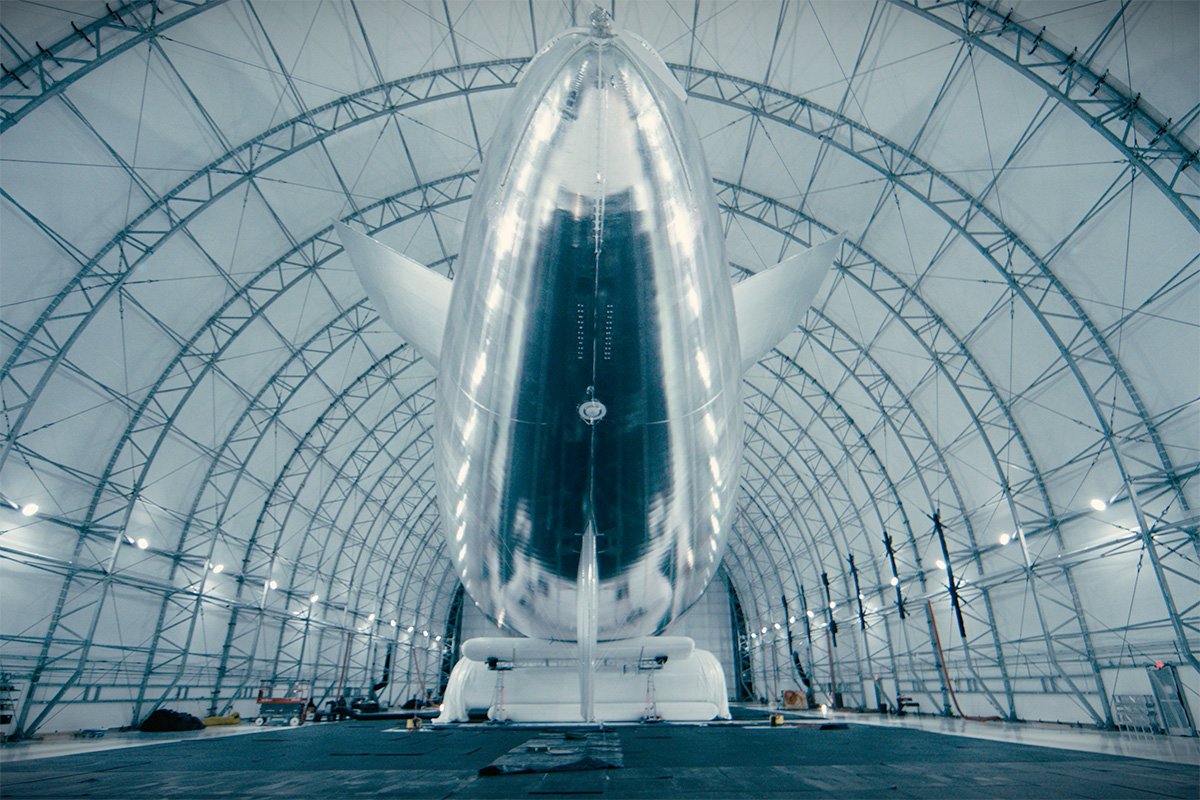
20 GREAT SUGGESTIONS FOR DECIDING ON THE SCEYE PLATFORM
How Do Sceye’s Stratospheric Airships Monitor Greenhouse Gases
1. The Monitoring Gap is Much Larger Than Many People Believe.
Emissions of greenhouse gases from the global atmosphere are tracked via a range of ground stations and occasional airborne missions, and satellites that operate hundreds of kilometers over the Earth’s surface. Each one has its limitations. Ground stations are not as extensive as well as geographically biased towards rich nations. Campaigns by aircraft are costly in duration, are short-term, and limited in coverage. Satellites can be used to cover the globe but aren’t able to provide the spatial resolution required to pinpoint specific emission sources — the leak of a pipeline, a landfill that releases methane, or an industrial unit that is not reporting its output. The result is a monitoring system with serious errors at exactly the extent where accountability and control have the greatest impact. Stratospheric platforms are increasingly perceived as being the missing middle layer.
2. The Altitude Effect is a great way to monitor Satellites can’t duplicate
There’s a mathematical argument the reasons why 20 km is better than 500 kilometres in terms of monitoring emissions. A sensor operating from stratospheric altitude can detect a ground footprint of up to a hundred kilometres but still close enough to identify emission sources with significant level of resolution. These include individual facilities roads, roads, agricultural zones. Satellites that look at the same area from low Earth orbits cover it much faster however with a smaller granularity and the time between revisits means that a methane vapor that appears and disappears in a matter of hours could never be captured at all. A platform that holds its position above an area of interest for a period of days or weeks at a given time can transform intermittent snapshots into continuous surveillance.
3. Methane is a Priority Target for a reason.
Carbon dioxide gets most of the media attention, but methane is the greenhouse-gas where near-term monitoring improvements could make the biggest difference. Methane’s potency is higher than CO2 in a 20-year span and a substantial proportion of methane emissions anthropogenic originate from point sources — infrastructure for oil and gas production landfills, waste facilities, agriculture and industrial operations. They are both detectable as well as fixable after they have been identified. Methane monitoring in real-time via a permanent stratospheric monitoring platform means that regulators, operators and governments can find leaks even before they happen rather than discovering these leaks months later with annual inventory reconciliations that generally rely on estimates, not measurements.
4. The design of Sceye’s airship is perfectly for the Monitoring Mission
The factors that define the best telecommunications platforms and a good environmental monitoring platform cross-pollinate more than you think. Both require long endurance steady positioning, as well as sufficient payload capacity. Sceye’s airship design is lighter than air and solves all three. Because buoyancy performs the essential purpose of staying above the ground so the platform’s power consumption does not get used up by creating lift — it’s available for propulsion and powering the sensors that suite the mission requires. When it comes to monitoring greenhouse gases, specifically it’s necessary to carry cameras, spectrometers and other data processing hardware, without the heavy weight restrictions which limit fixed-wing HAPS designs.
5. Station Keepers Are Not Negotiable to Information on the Environment that is useful
A monitoring platform that has a tendency to drift can produce data that’s hard to comprehend. Knowing exactly where a sensor was at the time of recording a reading is essential to attribute that reading to an origin. Sceye’s emphasis placed on accurate stationkeeping — sustaining at a constant position above the target area through active propulsion It’s more than an arbitrary performance measure. It’s part of what makes the data scientifically substantiable. Stratospheric earth observation is only genuinely useful for regulatory or legal reasons when the spatial record is secure enough to stand to scrutiny. Drifting balloon platforms are however capable their sensors, can’t offer that.
6. The Same Platform Can Monitor the effects of oil pollution and Wildfire Risk at the Same Time
One of the most exciting aspect of the multipayload model is that the various environmental monitoring missions are able to complement one another on the same vehicle. Airships operating in zones of offshore or coastal waters can be equipped with sensors that are calibrated for oil pollution detection, in addition to those monitoring CO2 or methane. On land, the same platform architecture is able to support wildfire detection technology that can identify smoke plumes, heat signatures and stress indicators of vegetation which are the precursors to ignition events. Sceye’s approach to mission design does not consider these as distinct programmes requiring separate aircraft but as parallel use cases for infrastructure that’s already positioned and operating.
7. Detecting Climate Disasters with real-time changes the Response Equation
There’s a huge difference between being aware that a wildfire started 6 hours ago versus knowing that it started just 20 minutes in the past. The same applies to industrial accidents releasing toxic gases, floods that are risking infrastructure, or unexpected methane emissions from permafrost. Monitoring climate disasters in real in time by a continuous stratospheric monitoring platform offers emergency managers along with government agencies and industrial companies a chance to act that does not exist when monitoring relies on earth-based reports. The significance of this window increases when you realize how the early stages for most environmental emergencies are as well the ones where intervention is most effective.
8. The Energy Architecture Makes Long Endurance Monitoring a Viable
Environmental monitoring missions can only provide their full value if the platform stays on station long enough to build an accurate data record. Methane readings for a week across an oil field can tell you something. Months of continuous data gives you something actionable. The ability to sustain that endurance is dependent on solving the overnight energy problem -your platform needs to be able to keep enough power in the daytime to allow for all of its systems throughout the evening without affecting their position or sensor operation. Improvements in lithium-sulfur battery technology which have energy densities of approximately 425 Wh/kg, combined with an improvement in solar cell efficiency are what make a true closed power loop feasible. For those who do not have both features, endurance is an aspiration, not a definition.
9. Mikkel Vestergaard’s background explains the importance of the environment
It’s important to understand why a stratospheric aerospace company places such the emphasis it does on greenhouse gas monitoring and detection of disasters rather than focusing on the revenue generated by connectivity. Mikkel Vestergaard’s experience in applying technology to major environmental and humanitarian needs gives Sceye an orientation to the future that will determine which mission the company puts on its agenda and how it explains its platform’s mission. The environmental monitoring capabilities aren’t an additional payload slapped on to make a vehicle for telecoms appear more environmentally responsible. They are a true belief of the need for stratospheric infrastructure to be involved in climate protection, and that the same platform will accomplish both without compromising any one of them.
10. Data Pipeline Data Pipeline Is as Important as the Sensor
Data collection from greenhouse gases in the stratosphere’s atmosphere is only one part of the matter. Getting that data to the people who require it, and in a format they are able to act on, in something like real-time is the second half. A stratospheric-based platform with onboard processing capability and direct downlink to ground stations will reduce the time between detecting and making a decision significantly relative to systems that simply batch data to be later analyzed. for natural resource management and monitoring of regulatory compliance or emergency response, the timing of the data is often in the same way as its accuracy. Integrating the data pipeline into platforms from beginning, rather than putting it off as an afterthought is what is distinct about serious stratospheric terrestrial observation from non-deliberate sensor campaigns. View the best natural resource management for website advice including sceye haps airship payload capacity, HIBS technology, Sceye Softbank, what are high-altitude platform stations haps definition, aerospace companies in new mexico, solar cell efficiency advancements for haps or stratospheric aircraft, HAPS investment news, space- high altitude balloon stratospheric balloon haps, what does haps, softbank sceye partnership haps and more.
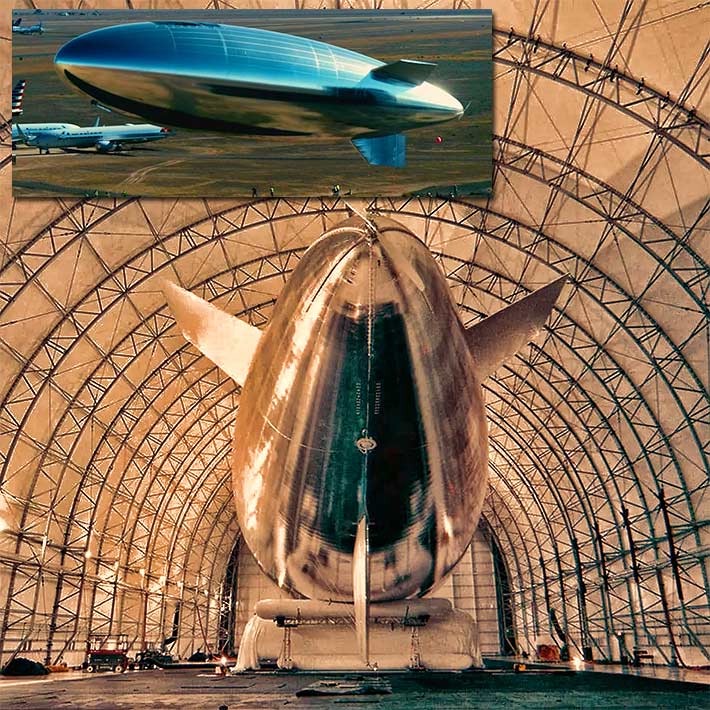
Mikkel Vestergaard’s Vision Behind Sceye’s Aerospace Mission
1. Founding Vision is a neglected factor In Aerospace Company Outcomes
The aerospace industry has two broad types of company. The first one is based on the search for applications of technology — an engineering ability looking for a market. The other starts with a need that is significant and works backwards from the technology needed to address the issue. The distinction seems abstract until you analyze what kind of firm actually produces through partnerships, the type of partnerships it pursues, and how it makes trade-offs when resources become scarce. Sceye falls in the second category. having a clear understanding of the orientation is crucial to understand why the company makes the specific selections in engineering that it has madewhich include lighter-thanair design, multimission payloads, an emphasis on endurance, and a foundational basis to be located in New Mexico rather than the coastal aerospace clusters which attract most venture-backed space companies.
2. The Problem Vestergaard Took On Was Much Bigger than Connectivity
Most HAPS companies anchor their founding narrative around telecommunications — to bridge the gap in connectivity the untapped billions, and the economics of reaching people in remote areas without any infrastructure that is terrestrial. These are all real and significant issues, but they’re commercial problems that require solutions from commercial companies. Mikkel Vestergaard’s starting point was different. His background in applying high-tech technology to tackle environmental and humanitarian challenges produced a founding orientation at Sceye that views connectivity as only one result of stratospheric structures rather than as its primary function. Greenhouse gas monitoring is a key component, as are disaster detection, Earth observation monitoring for oil pollution and management of natural resources were part of the mission’s framework from the beginning. These were not additional features later added to make the telecoms platform appear more socially conscious.
3. The Multi-Mission platform is a direct expression of that Vision
If you realize that the fundamental question was how the to use the stratospheric network to address crucial connectivity and monitoring issues simultaneously with a multi-payload structure, it does not appear to be a clever business strategy and appears like a sensible solution to the question. The platform that houses wireless communications equipment with real-time monitoring sensors and technologies for wildfire detection isn’t attempting become everything to all It’s just expressing an overall view that problems to be solved from within the stratosphere are interconnected and a platform capable of addressing several of them at once is more aligned with the goals than a platform made to work with a single revenue stream.
4. New Mexico Was a Deliberate Selection, Not an Unintentional One
Sceye’s place of business on the border of New Mexico reflects practical engineering needs — airspace access and testing conditions in the atmosphere, capability to climb altitudes — but it also tells a story regarding the company’s brand identity. The well-established aerospace industry clusters located in California and Texas are home to companies whose primary clients are investors, defense contractors, and the media industry that surrounds these areas. New Mexico offers something different in terms of the physical conditions needed for the actual task of designing and testing stratospheric lighter-than air systems without the rigors of being in close proximity to those who finance and write about aerospace. In the aerospace industry situated in New Mexico, Sceye has developed a program of development based around the validation of engineering rather than public narrative. A decision that shows a founder who is who is more concerned about whether the platform actually functions instead of whether it can produce amazing announcement cycles.
5. It is a design priority to ensure that endurance Is an indication of a longer-term mission focus
Short-endurance HAPS platforms are interesting demonstrations. Long-endurance platforms function as infrastructure. The emphasis the importance of Sceye the endurance of its platforms — building vehicles that can hold station for months or weeks instead of days reflects a founder’s understanding that the issues worth addressing from the stratosphere aren’t solved themselves during flight campaigns. Greenhouse gas monitoring which operates for about a week then goes out of service, creating a record with limited scientific or regulatory value. Disaster detection that requires the platform to be moved and launched after every deployment does not provide the continuous early warning system that emergency managers need. The endurance requirement is an indication of what the task actually demands but is not a measure of performance that is merely a means to measure.
6. Humanitarian Lens Shapes Partnerships Humanitarian Lens Shapes Which Partnerships Preferentially Feature
Every possible partnership is worth exploring in the first place, and the criteria that an organization employs to evaluate potential partners tells us something fundamental about its goals. Sceye’s agreement with SoftBank on Japan’s HAPS network — which will provide early commercial services in 2026- is notable not just due to its commercial scope, but for its alignment with an actual country that requires its stratospheric infrastructure. Japan’s seismic vulnerability, the complex geography, and national policy of environmental monitoring makes it a location in which the platform’s multi-mission capabilities serve real-world needs rather than providing revenue in a sector that already has enough alternatives. This alignment between commercial partnerships and missionary goals is not just an accident.
7. The investment in Future Technologies Requires Conviction About the Problem
Sceye is a startup company operating in a developing environment where the technologies it depends on such as lithium sulfur batteries at 425 Wh/kg energy densities, high-efficiency solar cells designed for stratospheric aviation, and advanced beamforming technology for stratospheric telecom antennas — are all just a few steps ahead of what’s possible today. Planning a business around technologies which are progressing but not yet mature requires a founder who has a clear enough view of the need to justify the risk of a timeline. Vestergaard’s belief, that stratospheric connectivity will soon become a permanent element of global connectivity and monitoring will be the foundation for investing into future technologies that will not fully realize their potential until the platform they support has been in use commercially.
8. The Environmental Monitoring Mission Has Become More Important Since Its Inception
One of the advantages of forming a firm around something that is real rather than the latest technology trend is that the problem becomes more rather than less significant over time. When Sceye was formed, the need for continuous monitoring of greenhouse gases in the stratosphere Wildfire detection, catastrophe monitoring was compelling in the sense of. In the years since, escalating wildfire seasons, more intense scrutiny of methane emissions as part of international climate frameworks and the apparent shortcomings of the existing monitoring infrastructure have all strengthened the case for Sceye in a significant way. The vision for the first time hasn’t needed being re-written in order to remain useful, as the world has been moving toward it.
9. Sceye’s Careers Sceye Reflect their Breadth of the Mission
The range of disciplines required to develop and manage stratospheric-based platforms for multi-mission requirements can be greater than most aerospace-related programmes. Sceye careers cover aerospace science, materials engineering energy systems, telecommunications remote sensing, software development as well as regulatory matters — a cross-disciplinary profile that reflects an array of capabilities that the platform is built to do. Businesses that are based on a single-use technology are more likely to recruit within the field of technology. Businesses based around a challenge which requires multiple technologies to address the issue of hiring across the boundaries of these disciplines. The profile of talent that Sceye recruits and creates is a reflection the scope of the vision that was conceived at the time.
10. The Vision Works Because It’s Specific about the Issue But not the Solution
The most robust founding visions for technology companies are clear on the problem they’re working to solve and adaptable about the means. Vestergaard’s frame — permanent stratospheric technology for monitoring connectivity, environmental observation is clear enough to produce clear engineering requirements as well as clear partnership guidelines, but it is also flexible enough to adapt to the changing requirements of enabling technologies. As battery chemistry improves, as solar cell efficiency advances and HIBS standards become more mature, and as the regulatory framework for stratospheric operations evolves, Sceye’s mission continues to be the same. its approach to executing this mission can be adapted to the most efficient technology at every stage. This structure — fixed on the issue but adaptable to the solution is what gives the aerospace mission stability across a lengthy development process with a measurement in years instead of product cycles. Check out the recommended sceye haps project updates for site info including Sceye News, stratospheric internet rollout begins offering coverage to remote regions, Sceye stratosphere, sceye haps airship payload capacity, sceye greenhouse gas monitoring, sceye haps softbank japan 2026, what haps, sceye haps project updates, Stratospheric earth observation, sceye haps airship status 2025 2026 softbank and more.